If you have ever looked at a Lake Oconee tract and thought, "It’s just land," you could miss the details that matter most. Around Greensboro and greater Greene County, one parcel can be ready for a smooth sale while a similar-looking tract next door may face shoreline limits, zoning hurdles, or site-work delays. That is why working with a land specialist can help you see the full picture before you buy, sell, or plan your next move. Let’s dive in.
Why Lake Oconee tracts need specialized guidance
Lake Oconee is not a one-rule market. The reservoir created by Georgia Power’s Wallace Dam spans Greene, Morgan, Putnam, and Hancock counties, which means tract analysis can involve different local planning frameworks depending on where the property sits. Even when a parcel is marketed under the same Lake Oconee identity, the approval path may change by jurisdiction, as shown by Georgia Power’s project location materials.
In the Greensboro area, that matters more than many buyers and sellers expect. Greensboro manages current and long-range planning through its adopted comprehensive plan, while Greene County also maintains its own planning framework and future land use map. A land specialist helps you identify which rules apply first, instead of discovering conflicts later in the transaction.
Waterfront value is more than acreage
On Lake Oconee, shoreline utility can shape value just as much as total acreage. Georgia Power requires a valid permit before starting shoreline activities on Georgia Power land, and that applies to both leased and deeded properties. The company also states that it will not issue permits to new owners or validate existing shoreline structures until the proper legal agreement is signed, according to its shoreline management program.
That means a tract’s worth is not only about how much land you own. It is also about what you can actually do with the shoreline.
Dock eligibility can change the deal
Two tracts can appear nearly identical on a map and still offer very different waterfront use. Georgia Power states that on Oconee and Sinclair, a residential lot platted after 2000 must have at least 100 feet of straight-line shoreline and 100 feet of width at the project boundary to qualify for any shoreline structure other than a seawall. Older lots may follow different standards, with some pre-2000 lots eligible only for a smaller dock under the dock guidelines.
For you, this can affect pricing, buyer demand, and future usability. A land specialist looks beyond the listing sheet to confirm whether the tract’s frontage supports the use you have in mind.
Seawalls and shoreline work have strict rules
Seawall work is not automatic. Georgia Power says its approval is the minimum requirement before installing shoreline abutments, new seawalls are only allowed where erosion is evident, and wetlands may rule out a seawall entirely. The company also notes that county and state permits are required, rip-rap is required on the lake side of new or replaced seawalls, and work should minimize disturbance within the state waters buffer under the seawall guidance.
Georgia Power also highlights a 25-foot vegetative buffer and states that no mechanical clearing is allowed without prior written approval. If you are evaluating a waterfront tract, these details can affect budget, design, timing, and even whether your intended improvements are feasible.
Zoning and planning shape highest use
A tract’s highest and best use is rarely determined by acreage alone. In Greene County, zoning administration provides information on zoning classifications, permitted uses, setbacks, parking, landscape requirements, and sign regulations through the county’s zoning administration responsibilities. That makes zoning one of the first checkpoints when you are assessing development potential.
If your plan does not fit current zoning, the next step may be rezoning. Greene County’s zoning ordinance requires rezoning applications to be filed at least 30 days before the Planning and Zoning Commission meeting, and the application package must include detailed supporting documents such as surveys, concept plans, easements, access, utilities, buffers, and adjoining owner information under the county zoning ordinance.
Rezoning is not just paperwork
Incomplete applications are not processed. The county also reviews consistency with the Comprehensive Plan, infrastructure impacts, traffic, adjacent property values, and neighborhood scale. For larger projects, the same ordinance explains that Developments of Regional Impact may require broader review when a project could affect areas beyond the local jurisdiction.
This is where a land specialist adds practical value. Instead of treating a tract like generic raw land, you can evaluate whether the parcel supports a simple hold, a residential homesite, a commercial use, or a longer-term entitlement strategy.
Utilities and site work can limit potential
One of the biggest mistakes in land deals is assuming every acre is equally usable. Greene County notes that lot size and site feasibility can depend on building size, parking, groundwater flow, and the availability of utilities. The county also warns that the lack of public sewer or water can stop projects that cannot be served by septic systems, as outlined in its setback and site requirement information.
In other words, your tract may look strong on paper but still fall short if utility access is limited. A land specialist helps you test these questions early, before pricing or negotiations move too far.
Land disturbance near the lake can add time
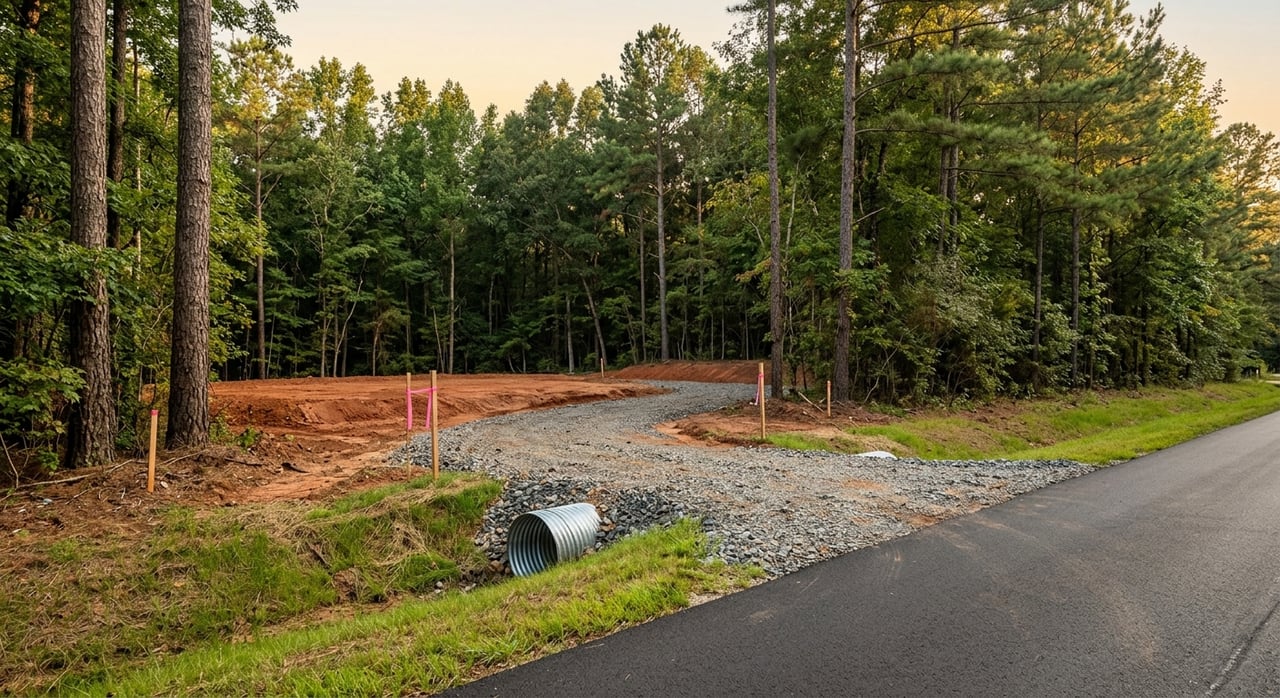
If development will disturb more than one acre, occur within 200 feet of state waters, or fall within a common development built on or after August 2000, Greene County says an ES&PC plan, land disturbance permit, and NOI are required. The county also states that the EPD NOI carries a 14-day waiting period before permits are issued, according to its erosion control permit requirements.
The same county page explains that a Land Disturbance Permit allows BMP installation first, followed by drainage, grading, streets, and utilities after inspection and approval. That can affect closing timelines, due diligence periods, and total project cost.
Buyer targeting should match tract reality
The best buyer for a Lake Oconee tract is not always the one offering the highest number first. The right buyer is usually the one whose intended use actually fits the property’s shoreline status, zoning, access, utilities, and permit path.
That is especially important in Greene County, where U.S. Census QuickFacts show a 2024 estimated population of 21,091, 79.1% owner-occupied housing, 32.6% of residents age 65 or older, and a median household income of $84,530. While those figures are not a lake-specific sales report, they do suggest a market with an established owner-occupied base that may include owner-users, retirees, and long-term homeowners.
Commercial tracts need another layer of review
Some Lake Oconee parcels may appeal to commercial or mixed-use buyers, but only if the tract can support that path. Georgia Power’s marina guidance states that commercial applications require FERC submittal and approval and must be commercially zoned by the county. The same guidance outlines frontage, setback, spacing, and dimension rules for group docks and marina-style uses in its marina guidelines.
For sellers, that means marketing should match actual feasibility. For buyers, it means your underwriting should be grounded in verified site conditions, not assumptions.
Tax status can affect selling strategy
A tract’s tax treatment can also shape timing and pricing. Greene County’s Board of Equalization notes that Georgia law allows special assessments for certain property types, including agricultural use, conservation use, historic properties, brownfields, and certain environmentally sensitive or wetland-related property through the Board of Equalization information.
If you are selling, that may influence carry costs and how you position the property. If you are buying, it can be an important part of your due diligence and ownership planning.
What a land specialist actually does
When you work with a land specialist for Lake Oconee tracts, you are not just hiring someone to put a sign in the ground. You are working with an advisor who helps sequence the deal correctly.
A strong process often includes:
- Identifying the correct jurisdiction and planning framework
- Confirming shoreline eligibility and Georgia Power requirements
- Reviewing frontage, buffers, wetlands, and seawall or dock constraints
- Checking zoning, setbacks, and likely permitted uses
- Evaluating sewer, water, or septic feasibility
- Flagging erosion-control and land disturbance permit triggers
- Gathering surveys, concept plans, and other supporting materials
- Positioning the tract for the buyer class most likely to execute
That kind of disciplined approach matters in a market where growth, redevelopment, and land-use decisions are actively managed. Greene County’s development authority and local planning efforts reflect a region that is balancing growth, services, and long-term land use with care.
Why this matters in Greensboro and Greene County
In and around Greensboro, Lake Oconee land deals reward precision. A tract with strong potential can underperform if the shoreline rules, zoning path, or site constraints are misunderstood. On the other hand, a well-analyzed parcel can attract the right buyer, support a cleaner negotiation, and move toward closing with fewer surprises.
That is where experience matters. If you are buying, selling, or evaluating a Lake Oconee tract, working with a land advisor who understands entitlement risk, waterfront rules, and buyer targeting can help you make a more confident decision. If you want disciplined guidance on land, commercial property, or development strategy in East Georgia, connect with Ashley Goodroe.
FAQs
Why should you use a land specialist for Lake Oconee tracts?
- A land specialist helps you evaluate jurisdiction, shoreline rules, zoning, utilities, permits, and buyer fit so you can make a more informed decision.
What shoreline rules matter for Lake Oconee waterfront land?
- Georgia Power permit requirements, dock eligibility standards, seawall rules, vegetative buffers, and clearing restrictions can all affect how a tract may be used.
How does zoning affect land in Greensboro and Greene County?
- Zoning helps determine permitted uses, setbacks, parking, and development options, and rezoning may require surveys, concept plans, and formal review.
What permits might be needed for land disturbance near Lake Oconee?
- Depending on the site, you may need an ES&PC plan, a land disturbance permit, and an NOI, especially if work disturbs more than one acre or is near state waters.
Can commercial buyers use any Lake Oconee tract for marina or group dock plans?
- No. Commercial waterfront uses may require commercial zoning, Georgia Power review, and FERC approval, along with site-specific frontage and design compliance.