If you are looking at commercial real estate in Milledgeville, one question matters more than almost anything else: where does your business actually fit? Not every concept belongs in every corridor, and in a market like Milledgeville, that distinction can shape visibility, customer flow, operations, and long-term value. When you understand how the city’s districts and growth areas work together, you can narrow your search faster and make better real estate decisions. Let’s dive in.
Milledgeville works as distinct submarkets
Milledgeville is not one generic commercial market. The city’s land development code separates nonresidential land into districts such as Central Business Commercial, Community Commercial, Heavy Commercial, Neighborhood Office Commercial, Office Institutional, and industrial categories like Light Industrial and Heavy Industrial.
That matters because each district supports a different type of business activity. In simple terms, Milledgeville breaks into a few clear patterns: downtown for walkable and historic commercial uses, Highway 441 for regional retail and visibility, neighborhood and institutional edges for quieter service users, and industrial areas for logistics, manufacturing, and back-of-house operations.
Downtown Milledgeville fits walkable businesses
CBC supports a compact core
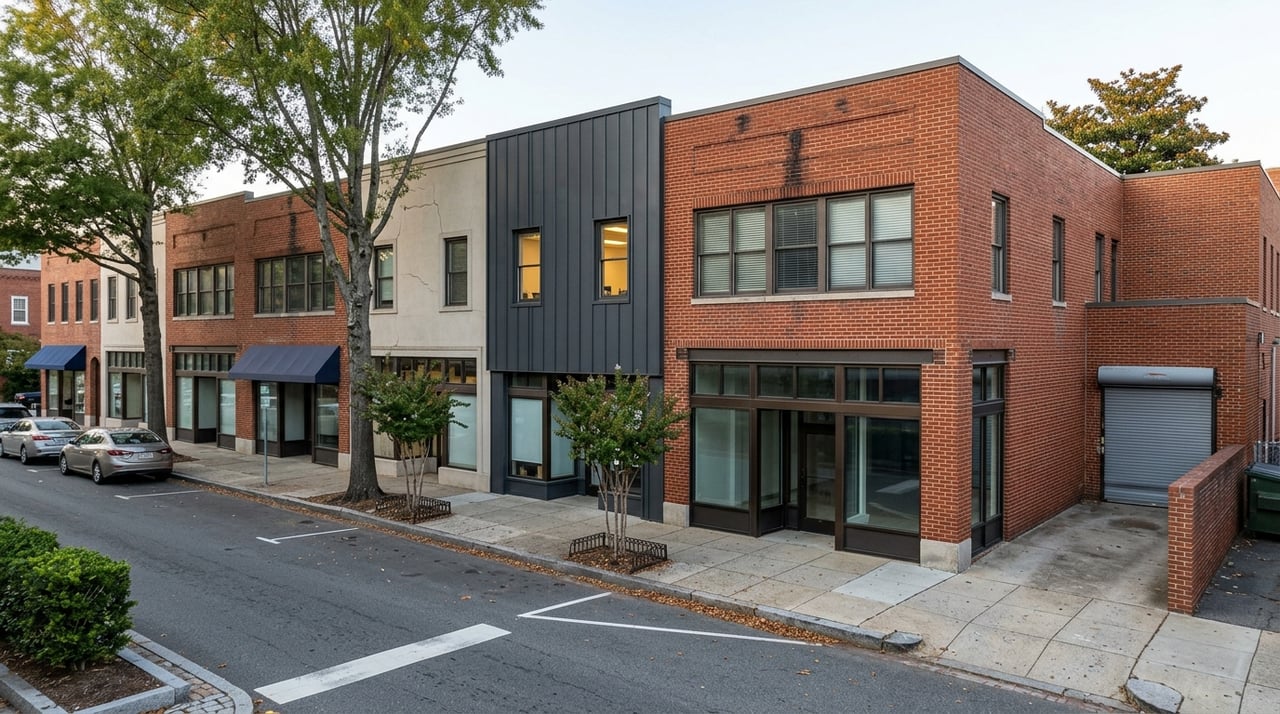
Downtown Milledgeville lines up closely with the city’s Central Business Commercial, or CBC, district. This is the city’s most intensive mixed-use commercial district, designed to serve as a central hub for economic and administrative activity with a pedestrian-friendly form and buildings close to the street.
For business owners and investors, that creates a very specific kind of opportunity. Downtown is generally the strongest fit for storefront retail, restaurants, mixed-use buildings, civic-adjacent offices, and other concepts that benefit from foot traffic, character, and a street-level presence.
Historic character shapes business appeal
Milledgeville Main Street describes downtown as a historic-preservation-led district centered on architecture, walkability, personal service, local ownership, and community identity. That identity is a real part of the business case for downtown space.
If your concept depends on experience, atmosphere, or a destination feel, the downtown environment can support that well. Cafés, boutiques, salons, arts and cultural uses, restaurants, bars, and practical retail all appear to fit within the existing business mix.
Historic rules matter downtown
Downtown opportunity also comes with added design oversight. In the historic district, exterior alterations, new construction, demolition, and relocation require a Certificate of Appropriateness, and the city uses local rehabilitation guidelines for downtown commercial buildings and signs.
That does not mean downtown is off-limits. It means you should expect a more thoughtful process if your project involves exterior changes, signage updates, or redevelopment of an older building.
Downtown often rewards experience-driven uses
In practical terms, downtown tends to work best when your business gains value from place. If customers are likely to walk in, stay a while, or choose you because of the setting, the historic core may be the right match.
The downtown district is also supported by local revitalization tools, including a façade-match grant of up to $1,500 and the Milly Money local-spend program. Those details reinforce the city’s ongoing focus on keeping downtown active as a business and community destination.
Highway 441 fits visibility and access
441 is Milledgeville’s retail spine
If downtown is about character and walkability, Highway 441 is about visibility, access, and scale. Milledgeville’s 2023 comprehensive plan says commercial development is clustered within the city and along Highway 441, primarily north of the city, with a major cluster near the 441 Bypass and Milledgeville Mall area.
The same plan says most future commercial growth is expected along the Highway 441 corridor between Milledgeville and Lake Sinclair. For investors, tenants, and business owners, that points to 441 as the main regional commercial spine.
CC supports broad retail and office uses
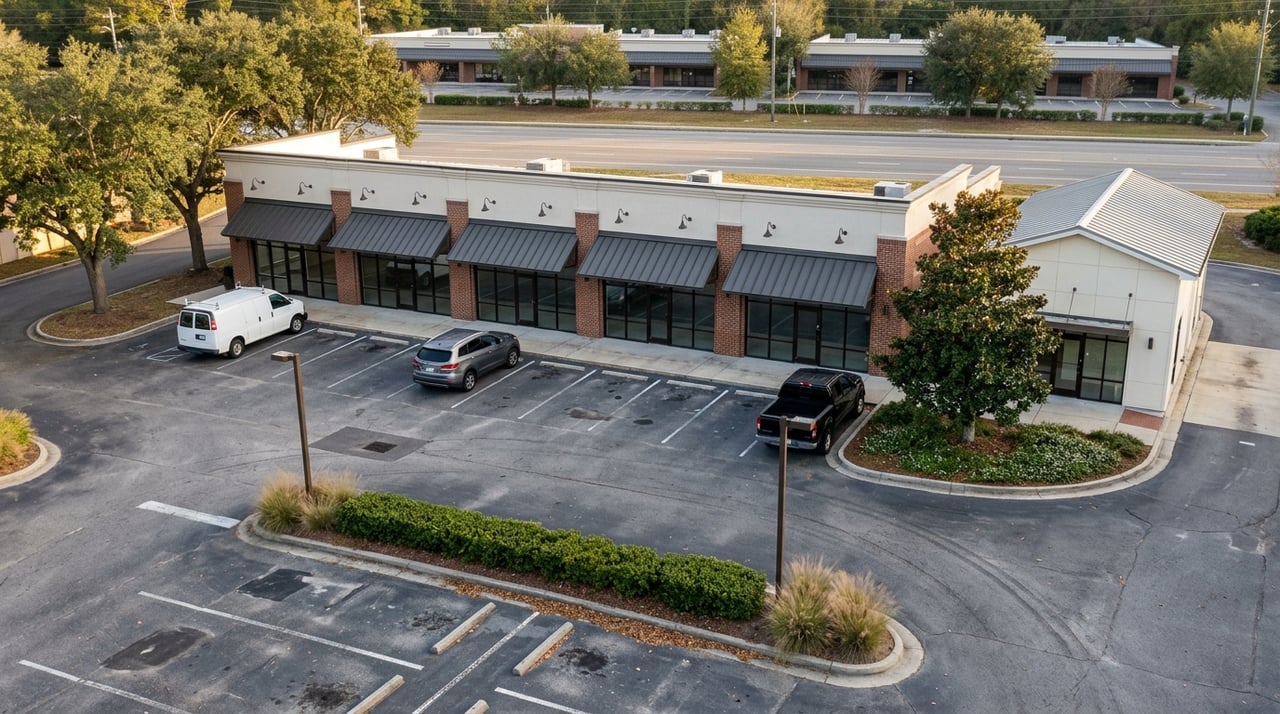
The Community Commercial, or CC, district is built for a full range of retail and office uses that serve the broader community. It is designed to reinforce the corridor itself, making it a natural fit for businesses that want road presence and easier vehicle access.
If your concept depends on strong exposure, convenient parking, and space for a broader customer base, CC-style properties along major corridors often make the most sense. This is where visible retail, corridor-facing office users, and strip-style commercial are generally most aligned.
HC supports more utilitarian concepts
Some businesses need even more room and flexibility. Milledgeville’s Heavy Commercial, or HC, district is intended for sales and service uses that edge into a light-industrial character.
That includes uses such as major car repair and service, auto painting and body shops, contractors, large truck sales, boat and heavy-equipment sales, manufactured home sales, and home-improvement retail with outside storage. If your operation is more functional than walkable, and if outdoor storage or larger lots are important, this is usually a much better fit than downtown or neighborhood commercial settings.
Neighborhood edges fit quieter service uses
NOC works for modest offices and services
Not every business needs highway traffic or a downtown storefront. Milledgeville’s Neighborhood Office Commercial, or NOC, district is designed for modest professional offices and retail services near residential areas.
The city code is clear that NOC is not intended for moderate-to-large retail or office centers. It also does not allow drive-in windows or noisy or odorous uses, which helps define the kind of businesses that belong there.
Best uses are low-intensity and repeat-visit
That makes NOC a practical fit for smaller-scale service concepts. Think in terms of quiet offices, specialty retail, and service businesses that depend more on repeat local demand than on regional traffic counts.
The code also limits food uses in this setting to custom-service restaurants without drive-in windows. So if your concept is lower intensity, appointment-based, or neighborhood-serving, these smaller commercial pockets may offer a better operational fit.
Institutional areas fit office and healthcare uses
OI supports office and institutional activity
Milledgeville’s Office Institutional, or OI, district covers administrative and professional offices along with institutional uses such as hospitals, clinics, churches, and schools. This creates a broader lane for office and service users that operate well near civic or institutional clusters.
The development authority notes that Georgia College, Georgia Military College, and Central Georgia Technical College are all within four miles of downtown. The comprehensive plan also notes that most institutional uses are clustered in and around downtown.
Strong fit for healthcare and education-related users
This pattern can support medical and healthcare users, counseling practices, education-related businesses, and office users who benefit from being close to established institutions. These locations are typically less about impulse traffic and more about accessibility, recurring appointments, and proximity to related uses.
If your business relies on a stable local customer base and a professional setting, OI areas may offer a more logical placement than retail-heavy corridors.
Mixed-use redevelopment has selective opportunities
Central State is the key redevelopment node
For buyers and developers thinking longer term, the strongest official mixed-use redevelopment story in Milledgeville is the Central State Hospital campus. The comprehensive plan says the site is expected to continue redeveloping because its existing buildings and street network can support housing, commercial, and some industrial development.
This is not the same as a ready-to-go downtown storefront or a standard highway outparcel. It is more of a strategic redevelopment environment where vision, reuse potential, and project structure matter.
Other mixed-use growth is anticipated
The comprehensive plan also says mixed use is anticipated around Lake Sinclair and the Highway 441 corridor. That suggests future opportunities may continue to emerge in areas where residential, commercial, and service uses overlap.
For investors, this means Milledgeville is not only a corridor market. It also has select nodes where redevelopment and mixed-use planning could shape future value.
Industrial parks fit logistics and operations
Industrial users need different sites
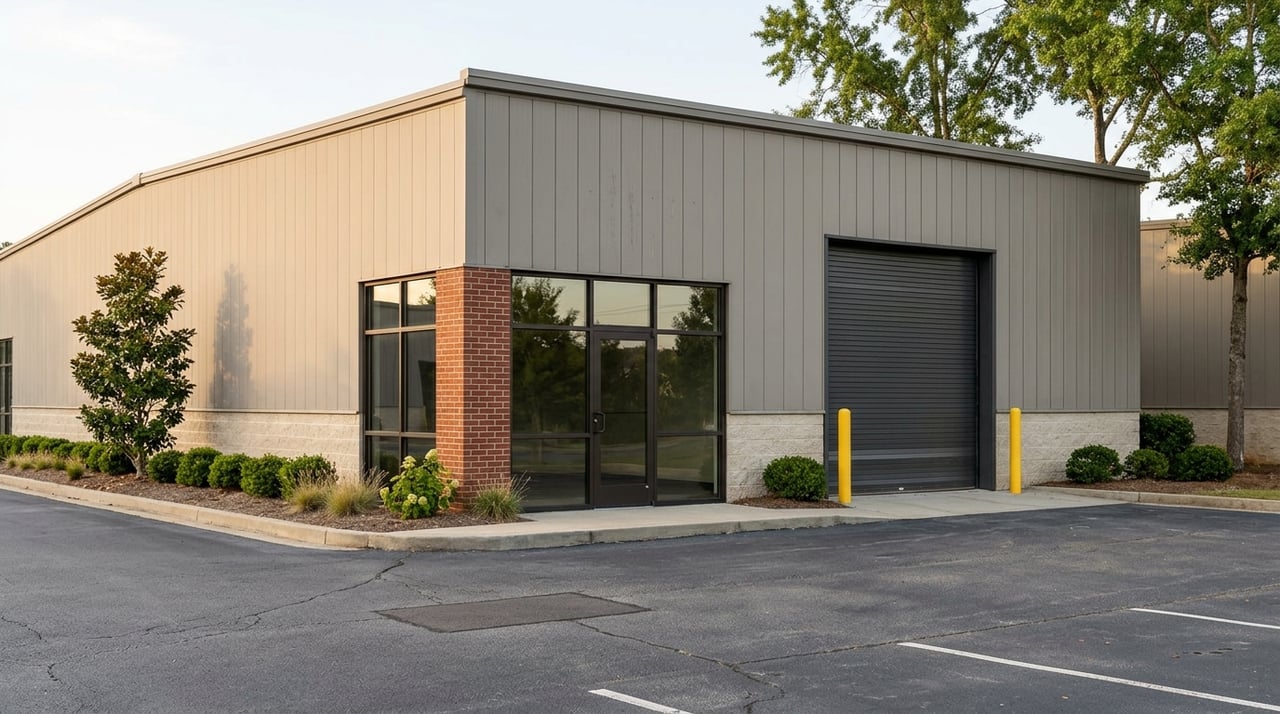
Consumer-facing storefront logic does not apply to every business. If your operation is focused on distribution, manufacturing, storage, contractor support, or other back-of-house functions, Milledgeville’s industrial nodes are the better conversation.
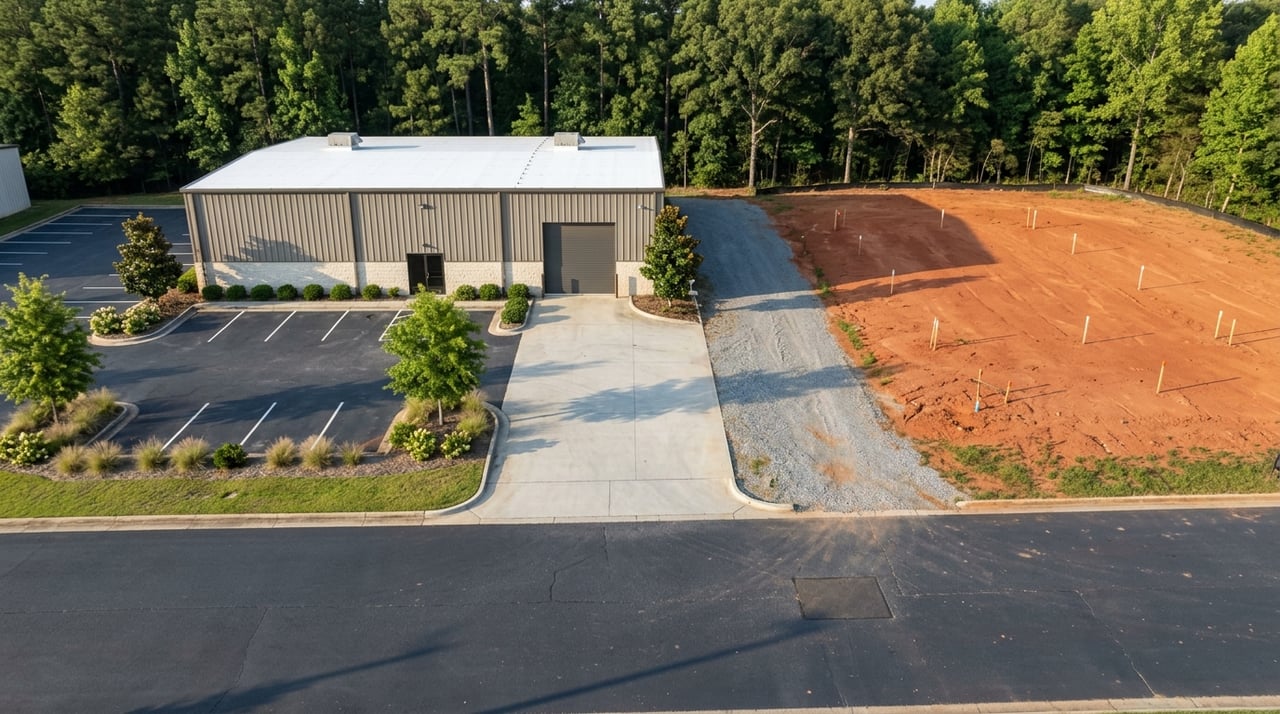
The Milledgeville-Baldwin County Industrial Park on Georgia Highway 22 is home to manufacturing, medical, and distribution companies and has more than 400 acres available for expansion. Sibley Place Industrial Park adds another major option with 1,500 acres and rail access served by Norfolk Southern.
Best for land-intensive operations
The comprehensive plan also identifies Sibley-Smith Industrial Park on Highway 441 and Fall Line Industrial Park as future industrial opportunities. These areas are generally the strongest fit for warehousing, manufacturing, flex space, and operations that need truck or rail access rather than customer walk-in traffic.
If your business needs loading areas, yard space, expansion capacity, or transportation infrastructure, industrial parks will likely outperform more traditional commercial corridors.
How to match your business to the right corridor
When you step back, Milledgeville becomes easier to read. Each corridor or district supports a different operating model, and the strongest real estate decisions start by matching the space to the business instead of forcing a concept into the wrong setting.
A simple way to think about it is this:
- Downtown Milledgeville for historic, walkable, experience-driven businesses
- Highway 441 and bypass areas for visibility, regional access, and broader retail demand
- Neighborhood commercial pockets for quiet service businesses and smaller offices
- Office institutional areas for healthcare, education-related, and professional office users
- Industrial parks and logistics nodes for warehousing, manufacturing, contractor support, and flex operations
The better that match is, the easier it becomes to evaluate rent, access, build-out, traffic patterns, and long-term usability.
Why corridor knowledge matters in a search
A commercial property can look appealing on paper and still be the wrong fit for your actual use. In Milledgeville, understanding the corridor and district framework helps you avoid spending time on sites that do not support your customer flow, parking needs, design goals, or operational requirements.
Whether you are buying, leasing, investing, or planning a future development play, local context matters. The strongest outcomes usually come from pairing zoning realities, corridor trends, and business needs before you make an offer or launch a search.
If you are weighing where your business, investment, or land strategy fits best in Milledgeville, working with a broker who understands commercial corridors, land use, and deal structure can save you time and help you move with more confidence. To explore opportunities with a local commercial and land specialist, connect with Ashley Goodroe.
FAQs
What type of business fits downtown Milledgeville commercial space?
- Downtown Milledgeville is generally best suited for walkable, experience-driven uses such as storefront retail, restaurants, mixed-use buildings, salons, arts-related concepts, and offices that benefit from a pedestrian-friendly historic setting.
What types of businesses fit the Highway 441 corridor in Milledgeville?
- The Highway 441 corridor is a strong fit for visible retail, community-serving office space, strip-style commercial, and larger commercial users that need access, parking, and regional exposure.
What does Milledgeville Heavy Commercial zoning support?
- Milledgeville Heavy Commercial zoning is intended for more utilitarian sales and service uses, including auto-related businesses, contractors, equipment sales, and some users that need outside storage or larger lots.
What kinds of tenants fit Neighborhood Office Commercial areas in Milledgeville?
- Neighborhood Office Commercial areas are designed for modest professional offices, specialty retail, and quieter service businesses near residential areas, not for large retail centers or drive-in uses.
Where do healthcare and office users fit in Milledgeville?
- Healthcare, administrative office, and education-related users often fit best in Office Institutional areas, especially in and around downtown where institutional uses are clustered.
Where should industrial and warehouse businesses look in Milledgeville?
- Industrial and warehouse users should usually focus on Milledgeville’s industrial parks and logistics-oriented nodes, including the Milledgeville-Baldwin County Industrial Park, Sibley Place Industrial Park, and other future industrial opportunity areas identified in the comprehensive plan.